
Imagine an owner who has spent decades building a regional heating and cooling operation. The customer list is extensive, the technicians are highly trained, and the community reputation is strong. When the owner begins to document daily workflows and financial realities for a possible transition, however, the files may be disorganized, maintenance agreements loosely tracked, and fleet costs buried in receipts. That makes a confidential transition discussion harder to prepare for. Organized foundational records give an owner a clearer way to explain how the operation works.
Preparing the documentation for an HVAC operation requires an intentional shift from relying on personal memory to creating a verifiable, organized system. Clear records allow outside observers to understand the daily mechanics, customer loyalty, and recurring revenue streams without guessing. The process of gathering and organizing these files forces an owner to confront operational gaps and streamline processes, making the business more organized regardless of whether a transition occurs tomorrow or in five years.
Rather than rushing to assemble documents when a transition discussion arises, owners can build a systematic approach to record-keeping that operates quietly in the background. A well-organized document room can reduce visible scrambling and provide a clearer picture of financial and operational information. The following sections outline record categories that often benefit from attention and organization.
Documenting Customer Relationships and Service Agreements
The foundation of an established HVAC company is its customer base, including recurring service and maintenance agreements. A list of names and addresses does not by itself explain the depth of those relationships. Owners can organize documentation showing the active status, terms, and historical performance of agreements. A practical system separates residential and commercial customers and tracks service-visit frequency, equipment age, and revenue per customer over time.
The documentation can outline the terms of preventative maintenance programs, including seasonal tune-ups, filter changes, and discounts for agreement holders. A documented renewal history gives an owner a factual way to describe repeat business without relying on subjective claims. Clear customer records create a more verifiable account of service quality and client retention.
Organizing Employee Roles and Operational Knowledge
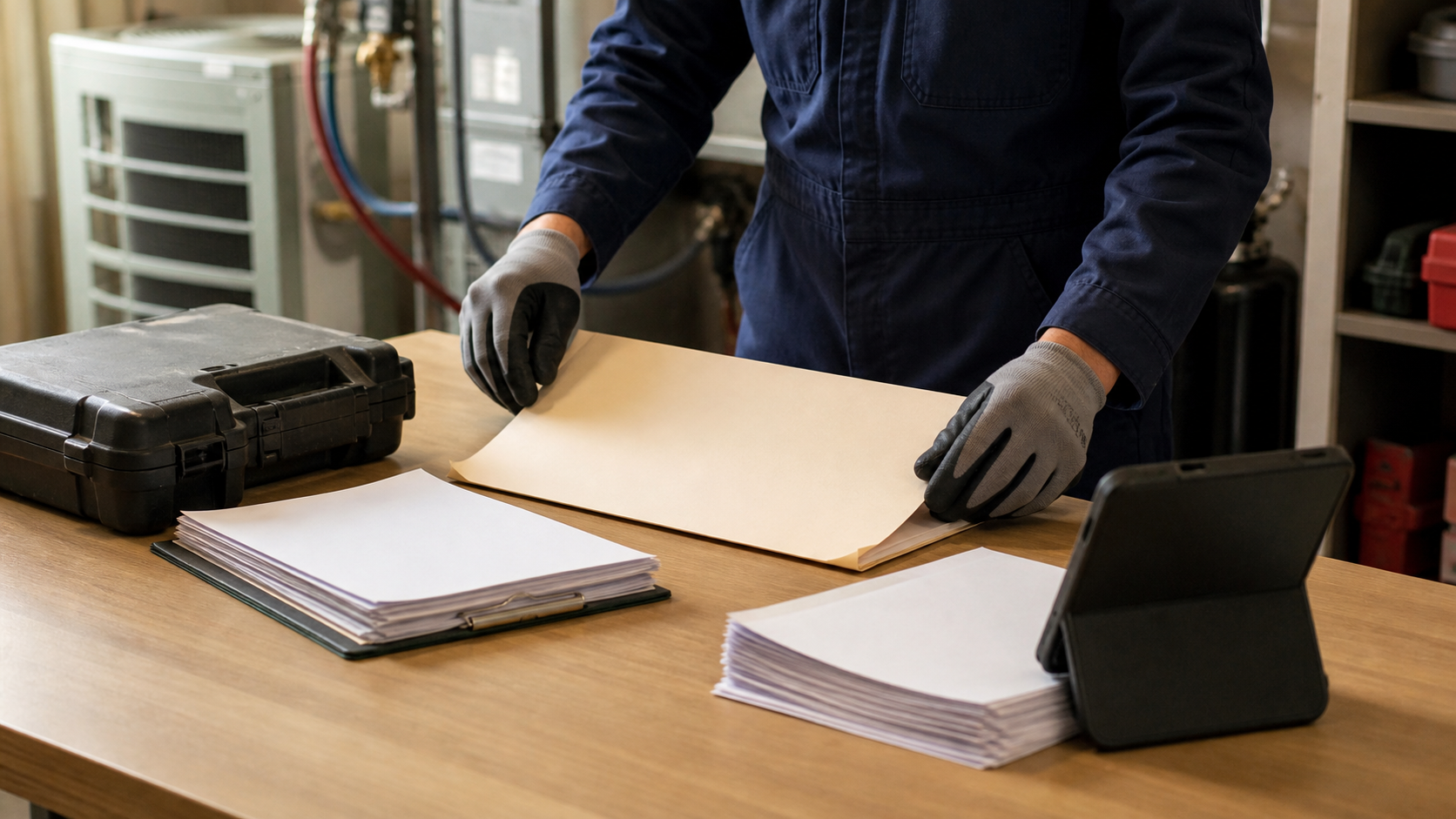
The daily operations of an HVAC company depend heavily on the skills, knowledge, and reliability of the technicians and office staff. An outside observer seeking to understand the business will closely examine how dependent the operation is on the owner’s direct involvement. Documenting employee roles and responsibilities is a critical step in demonstrating that the business can function smoothly without the owner present. Creating clear job descriptions for every role, from the lead installer to the customer service representative, helps clarify the organizational structure and daily operational flow.
Equally important is capturing the institutional knowledge that often resides only in the minds of long-term employees. This includes documenting the preferred vendors for specialized parts, the procedures for handling complex warranty claims, and the protocols for after-hours emergency calls. Keeping records of manufacturer certifications, safety training completions, and continuing education courses demonstrates a commitment to maintaining a skilled workforce. By creating a central repository of this operational knowledge, an owner ensures that the business can continue to deliver consistent service.
Structuring Financial Statements for Clarity
Clear and verifiable financial records are a central part of an organizational review. An owner can prepare financial statements that reflect the operating performance of the HVAC business and separate personal expenses or commingled funds where applicable. The primary documents include the balance sheet, income statement, and statement of cash flows; a qualified accountant can prepare or review them. Separating revenue streams in the records helps explain income from new equipment installations, repair services, and recurring maintenance agreements.
Furthermore, an owner can prepare a schedule of discretionary expenses. This schedule identifies expenses unique to the current owner’s personal choices, such as a company vehicle used for personal travel. Documenting these items helps separate them from the core operation. Organized financial records give an outside reviewer a clearer view of the business’s fiscal history.
Tracking Fleet Maintenance and Equipment Inventory
The vehicles used by an HVAC company represent a significant capital investment and support daily operations. An organized system for tracking maintenance, depreciation, and replacement schedules makes asset information easier to find. Fleet documentation can include maintenance logs for each vehicle, including oil changes, tire replacements, and major repairs. Tracking mileage, fuel consumption, and truck condition helps an owner describe remaining useful life and likely capital needs.
Beyond the fleet, the company’s inventory of parts and equipment can be tracked accurately. A documented physical inventory count reconciled with accounting records helps show the value of materials on hand. The system can follow turnover of common parts, such as filters, motors, and refrigerants, so the owner can spot obsolete inventory. Clear fleet and inventory records show an organized approach to managing physical assets.
Cataloging Local Credentials and Permit Responsibilities

Local requirements for HVAC work can depend on the jurisdiction and the work performed. An owner can organize applicable credentials, permit records, renewal dates, and the people responsible for important operational knowledge. The purpose is to make facts available for review, not to assume that a particular role or credential transfers automatically in a transaction.
A practical file can include past permits and inspections, internal procedures for scheduling work, and questions that need confirmation from the applicable authority. The owner can involve qualified counsel or the relevant authority when a transaction raises a specific regulatory question.
Formalizing Vendor and Supplier Relationships
The ability of an HVAC company to deliver timely service depends on access to equipment, parts, and materials. Documenting relationships with key vendors and suppliers helps prepare operating records. A clear account of those relationships can explain the company’s supply chain and potential vulnerabilities. The documentation can list primary distributors for the main equipment brands installed by the company and outline relevant agreement terms.
The owner can maintain a record of historical pricing trends for materials such as copper tubing or sheet metal. This information helps explain cost fluctuations and pricing decisions. If the company relies heavily on a single supplier for a critical component, the owner can document contingency plans for potential disruptions. A documented vendor-management system makes supplier information easier to review.
Protecting Confidentiality During the Preparation Phase
Organizing operating records for a possible transition calls for careful confidentiality. Rumors can create uncertainty among employees, customers, and vendors. An owner can establish appropriate access controls for gathering, storing, and reviewing documentation and integrate the work into routine administration where practical.
Additionally, the owner should carefully manage who is involved in the preparation phase. Limiting the circle of knowledge to a small group of trusted advisors helps maintain the confidentiality of the project. Utilizing secure, cloud-based storage solutions with restricted access ensures that sensitive information is protected from unauthorized viewing. For further insights into the discrete steps required during this process, owners should consider reviewing the organized approach to selling an HVAC business in Indiana.
Practical Next Steps for Record Organization
Building a usable system of operating records takes a deliberate, methodical approach. The goal is to move important operational knowledge out of the owner’s head and into a verifiable, accessible format. The process can begin with the most critical areas of the business and expand outward over time.
- Conduct a thorough review of all active service and maintenance agreements to verify their status and terms.
- Update job descriptions for key personnel and document daily workflows for each department.
- Work with a qualified accountant to separate personal expenses from the core operational financial statements.
- Create a comprehensive log of all fleet vehicles, noting their maintenance history and current condition.
- Document all applicable local credentials and the specific employees responsible for pulling permits and ensuring compliance.
By taking these steps, an owner builds a more organized and transparent operating record. The same discipline can make it easier to find information for day-to-day decisions as well as for a possible future transition. Taking time to catalog and secure operational records is practical business-management work.



0 Comments