Home ownership involves constant upkeep, from fixing leaky faucets to maintaining heating systems. In the course of managing these home care duties, a homeowner will eventually face a decision about repairing a malfunctioning appliance or replacing a worn-out device. However, before purchasing replacement parts, hiring a technician, or attempting a DIY fix, there is one critical step that is often overlooked: checking for active product safety recalls. Repairing an item that is subject to an active safety notice is a major safety risk and a waste of money. If a manufacturer has identified a fundamental defect in a product, attempting to patch the problem yourself does not resolve the underlying issue. Taking the time to check for safety notices ensures that you do not spend time and resources on compromised equipment.
A systematic recall check is especially relevant if you have recently moved into a new property or if you are considering selling or donating older household items. Safety hazards can remain silent for years, and physical recall postcards sent by manufacturers often fail to reach subsequent homeowners. Incorporating these simple verifications into your home management routine helps maintain a safe environment and prevents unexpected failures. Organizing these maintenance tasks and establishing clear safety protocols is a key part of managing your home efficiently. To build confidence in handling household projects and planning your maintenance budget, a good practice is to empower yourself with DIY home care advice.
Common Home Products Subject to Safety Alerts
Safety recalls affect a wide range of household products, but they are most common in categories that involve heating elements, electrical power systems, or heavy structural components. Focusing your attention on these specific areas makes the verification process efficient and ensures that your safety checks target the highest-risk items in your home.
Major Household Appliances: Dishwashers, refrigerators, washing machines, and clothes dryers are the workhorses of the modern home. Because they draw significant electrical current and handle water or gas, component failures can lead to severe consequences. Common recall issues in major appliances include faulty wiring that leads to overheating, failing control boards, and heating elements that do not shut off as intended. These defects present serious fire and shock hazards that should be addressed immediately by the manufacturer.
Power Supplies and Chargers: Small electronics, smart plugs, USB chargers, and lithium-ion batteries are found in almost every room. While convenient, these products should be checked for recalled models, damaged casings, overheating signs, and manufacturer safety notices. Recalls in this category often involve overheating, melting plastic casing, or electrical short circuits that can ignite nearby materials. Keeping chargers on hard, non-flammable surfaces and checking them for safety marks is a good habit for reducing electrical fire risk.
Heating and Ventilation Systems: Space heaters, dehumidifiers, water heaters, and air conditioners operate for hours at a time, often unsupervised. If a component defect causes a thermostat to fail or a fan motor to seize, temperatures can rise rapidly. Recall notices for dehumidifiers, heaters, and similar equipment often focus on overheating or fire hazards, so regular inspection before seasonal use is a key safety measure.
Furniture and Structural Items: Not all recalls are electrical. Heavy items like chest of drawers, shelving units, and television stands present a serious tip-over hazard, especially in homes with young children. Manufacturers frequently issue recalls for furniture that does not meet stability standards, providing wall-anchoring kits or refunds to secure the items.
How to Find and Verify Product Information
To verify whether a household item is subject to an active safety notice, you need to collect specific identifying information from the product itself. Looking at the brand name on the front of the device is rarely sufficient, as recalls are typically restricted to specific production runs, manufacturing plants, or date ranges.
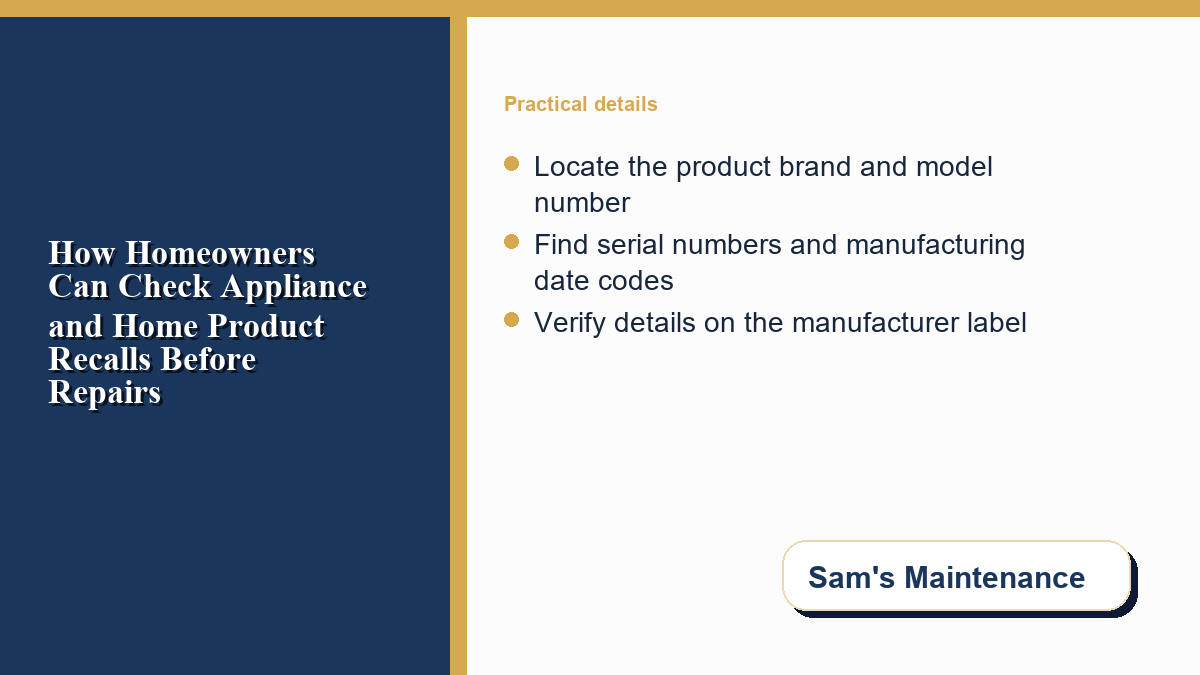
Locate the official manufacturer label on the item. This is usually a silver, black, or white sticker or metal plate. On kitchen appliances, you can find this label inside the door frame of dishwashers and ovens, on the back panel of refrigerators, or on the underside of countertop units. On power tools and chargers, the details are often stamped directly into the plastic casing. Write down the following details: the exact brand name, the model number, the serial number, and any lot or date codes. The date code or manufacture date helps isolate whether your item was built during the window of time affected by a recall.
For items that are vehicle-adjacent, such as garage door openers, utility trailers, or vehicle-mounted bike racks, you may need to locate the Vehicle Identification Number, or VIN. The VIN is a unique 17-character sequence of letters and numbers that identifies a specific vehicle or trailer. Finding these details before you start searching online prevents confusion and saves time.
A Step-by-Step Workflow for Recall Verification
Once you have gathered the product details, follow a clear workflow to check the item against official safety databases. This ensures you obtain accurate, verified instructions and avoid unreliable rumors or outdated forum posts.
The first step is to consult consolidated federal databases. In the United States, the primary portal is Recalls.gov, which combines safety notices from multiple government agencies. For consumer goods, kitchen appliances, furniture, and toys, the Consumer Product Safety Commission (CPSC) database maintains a searchable recall index. For automotive equipment, tires, and trailers, the National Highway Traffic Safety Administration (NHTSA) recall page provides a dedicated lookup tool. If the item is related to home health or medical devices, the Food and Drug Administration (FDA) safety portal handles the database.
The second step is to search the manufacturer’s official safety page. If you find a potential match on a government database, visit the manufacturer’s website and locate their recall or safety alerts section. They will provide the specific model validation tools, photos of affected units, and contact options to confirm your item’s status.
For homeowners tracking safety notices, checking a consolidated lookup tool for fire hazard recalls can provide a quick reference to identify common fire and shock risks in household gear. However, these third-party databases are designed for general research and convenience. They do not replace official manufacturer or government agency recall instructions. If you confirm that your product is recalled, rely on the official manufacturer notice for the exact remedy and safety steps.
Creating a Home Safety Audit Checklist
To keep your household safe, consider performing a quick safety audit of your major appliances and heating devices at least twice a year. The table below outlines the key focus areas, what details to check, and the official databases to consult.
| Equipment Category | Key Safety Hazards | Label Details to Locate | Official Database to Search |
|---|---|---|---|
| Major Appliances | Fire, electrical shock, water leaks | Model number, serial number | CPSC Recalls (cpsc.gov) |
| Space Heaters & Dehumidifiers | Overheating, component fire risk | Model number, date code | CPSC Recalls (cpsc.gov) |
| Power Adapters & Chargers | Electrical short circuit, fire risk | Brand, serial number, safety marks | CPSC Recalls (cpsc.gov) |
| Garage & Utility Gear | Mechanical failures, trailer sway | Model number, 17-character VIN | NHTSA Recalls (nhtsa.gov) |
Scheduling these safety audits alongside other recurring home projects ensures they are completed regularly. You can coordinate your safety reviews with battery replacements for smoke detectors and seasonal appliance maintenance by following our guide on essential seasonal maintenance projects for homes.
Safe Repair Decisions: When to Call a Professional
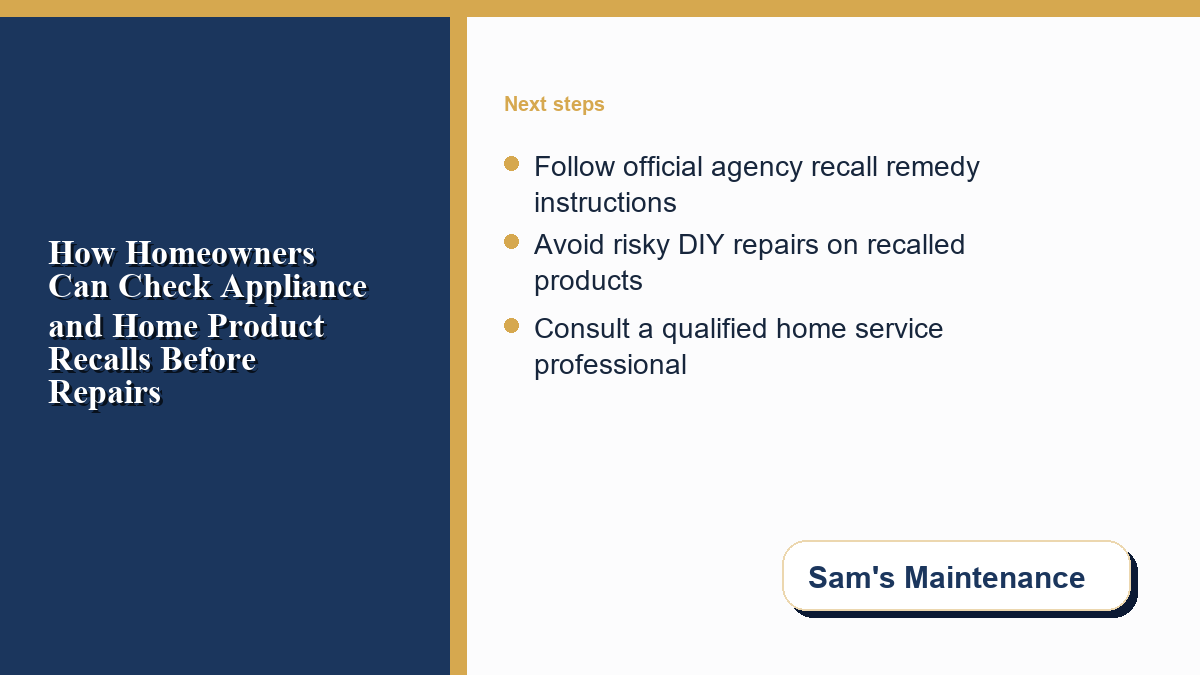
If your recall check reveals that an item in your home has an active safety notice, stop using the product immediately. For electrical appliances, unplug the cord from the wall outlet to eliminate any standby power risks. For gas appliances, follow the manufacturer’s shut-off instructions. Contact the manufacturer using the phone number or website provided in the official recall notice to register your item and claim the remedy.
The remedy provided by the manufacturer will typically fall into one of three categories: a full refund, a free replacement product, or a free repair. If the remedy is a repair, do not attempt a DIY fix unless the manufacturer explicitly sends a certified, user-installable kit with clear instructions. Standard home maintenance skills are not a substitute for factory-designed recall remedies. Attempting to repair a safety defect yourself using generic parts can compromise the appliance further, void your warranty, and increase safety hazards.
If the manufacturer’s remedy requires a technician, they will arrange for a qualified service professional to complete the repair in your home or at a local service center. Professional technicians receive specific training and use certified parts designed to eliminate the recall hazard. Following official guidance keeps your home safe and ensures your appliances operate reliably for years to come.
Frequently Asked Questions
Can I repair a recalled appliance myself if I have the skills?
No. You should not attempt to repair a safety recall defect yourself. Safety remedies are engineered specifically by the manufacturer to address the hazard. Unless the manufacturer provides an official self-repair kit, wait for a certified technician to complete the work or replace the unit as instructed in the official recall notice.
Do I need to be the original purchaser of a product to claim a recall remedy?
No. Recall remedies apply to the product itself, not the owner. Even if you bought the appliance second-hand, received it as a gift, or inherited it when you purchased a home, you are eligible for the remedy. You only need to provide the model number, serial number, or VIN to the manufacturer.
What should I do with a recalled item if the manufacturer offers a refund?
Follow the manufacturer’s instructions for returning or disposing of the item. They may provide a prepaid shipping box to return the product, or they may ask you to cut the power cord and upload a photo to verify the unit is permanently disabled before they issue a refund.
How can I find the model and serial number on a dryer?
On most clothes dryers, the manufacturer label is located on the inside of the door frame or around the drum opening. If it is not there, check the back panel near the top or bottom of the unit. The label will clearly display the model number and serial number needed for verification.
Are private search tools for recalls official?
No. Third-party recall search websites and apps are helpful tools for finding safety warnings, but they are not official government or manufacturer databases. Confirm any recall information and register for remedies directly with the official manufacturer or the regulating government agency.



0 Comments