
Introduction to Pier Maintenance Before Windy Conditions
Maintaining a coastal fishing pier requires diligence and a proactive approach, especially when preparing for periods of high winds. Coastal homeowners or property caretakers know that a well-maintained pier is essential for its longevity and usability. Whether you are preparing the property for personal use or ensuring it is secure ahead of seasonal changes, understanding how to inspect and secure a fishing pier is a critical part of property management. It is important to distinguish between maintenance readiness—ensuring the physical structure and its accessories are secure—and a real-time marine safety decision. The readiness of a pier’s physical components does not determine whether it is safe for a person to be on it during hazardous weather.
When wind speeds increase, loose items can become projectiles, and weakened structural elements can fail under the added stress. A comprehensive inspection should be part of your routine. By taking the time to review essential seasonal maintenance projects, you can integrate pier inspection into your broader property care strategy. Regular checks prevent minor wear and tear from becoming major structural issues during a blow.
Before you or anyone else plans an outing, it is crucial to consult official marine weather forecasts. For instance, those planning activities must check wind speed before fishing from a pier using reliable resources like the National Weather Service (NWS) Marine Forecast. This ensures that maintenance readiness does not overshadow the necessity of making informed, safe decisions regarding actual access and use.
Structural Inspection: Fasteners, Decking, and Railings
The foundation of pier maintenance lies in its structural integrity. The continuous exposure to salt, moisture, and wind causes significant wear on building materials. Begin your inspection by examining all visible fasteners, including bolts, screws, and nails. Over time, these can corrode or loosen due to the constant vibration and movement caused by wave action and wind. If you notice loose fasteners or signs of corrosion, consult a qualified local professional to assess the structural integrity.
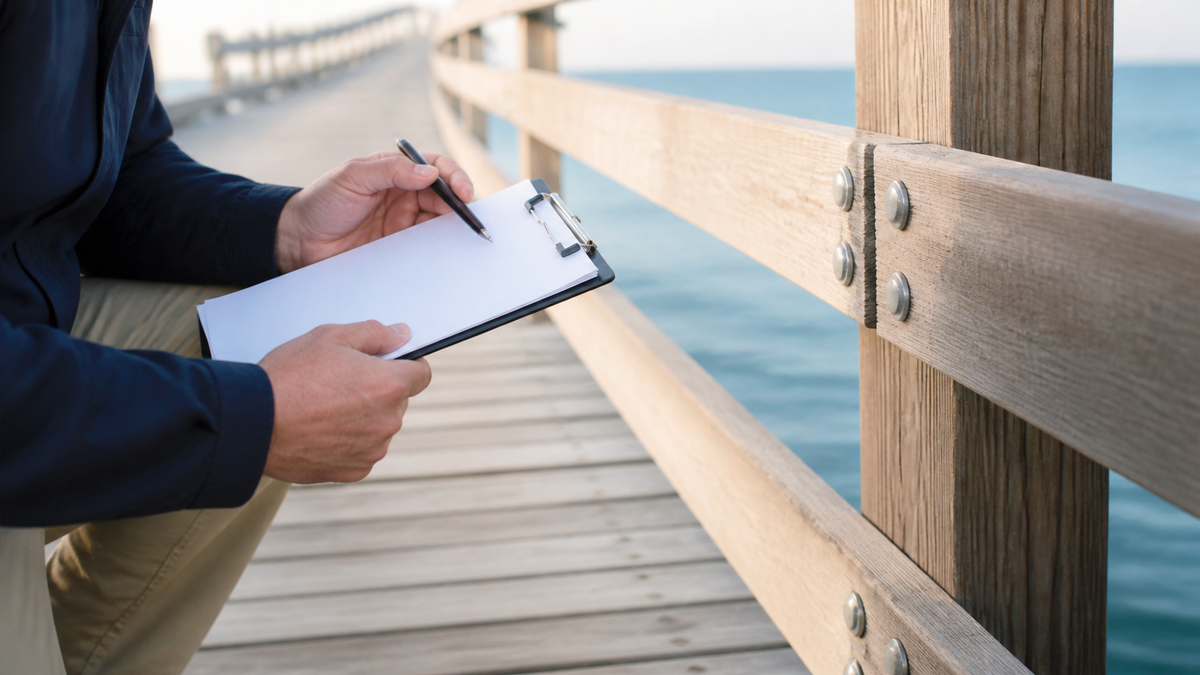
Next, visually inspect the decking for rot, splintering, movement, or an uneven surface. Treat a questionable board as a reason to close that area, not as a quick do-it-yourself repair. The planning principles in our essential guide to basic maintenance can help you document the issue before a qualified professional evaluates the pier.
Railings are perhaps the most critical safety feature on a pier. They must be able to withstand significant lateral force. Inspect railings visually for stability. If there is any concern about their strength, contact a qualified local professional for structural repair. Ensure that the balusters or spindles are intact and securely fastened. A compromised railing offers a false sense of security, which is dangerous in any condition, but particularly hazardous when wind speeds escalate.
It is important to remember that these structural checks are about the longevity and integrity of the pier itself. They do not constitute an assessment of whether the pier is safe to occupy during a high-wind event. Even a perfectly maintained pier is dangerous in severe weather conditions, and no amount of structural readiness changes the need to adhere to official weather warnings and common sense.
Securing Loose Gear and Accessories
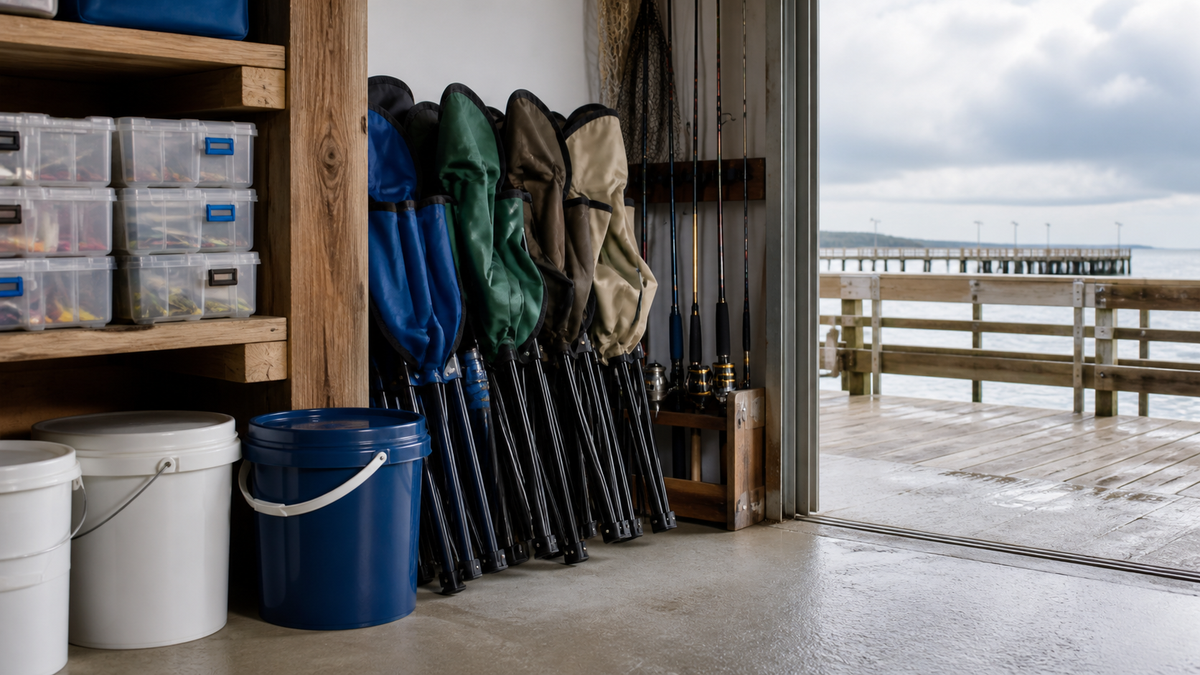
A fishing pier often accumulates chairs, bait buckets, tackle, and other movable gear. Before deteriorating weather arrives, remove loose items to a secure indoor location. Visually note damaged benches, dock boxes, lighting, or electrical components, but do not improvise structural or electrical work. Isolate the area and ask an appropriately qualified local professional to evaluate fixtures, wiring, and load-bearing connections.
Access Control and the Stop-Work Decision
Part of maintaining a pier is managing access, especially when conditions deteriorate. As a property caretaker, establishing a clear protocol for when the pier should be closed is a vital responsibility. This is not about deciding what wind speed is “safe,” but rather about implementing a complete shutdown when official forecasts indicate hazardous marine conditions.
The National Data Buoy Center (NDBC) provides current observations that can be read alongside NWS forecasts, posted pier rules, and local emergency instructions. Marine products are not universal pier-closure thresholds. Follow the access policy established for the specific property and close the area whenever an official instruction, posted rule, or observed condition makes continued use uncertain.
When you decide to shut down the pier due to impending wind, communicate this clearly to anyone who might have access, whether they are family members, renters, or guests. Place a clear, highly visible sign at the locked gate stating that the pier is closed due to weather conditions. The decision to close the pier should be absolute. Do not attempt last-minute maintenance tasks once the winds have started to pick up. The NWS Wind Safety guidelines emphasize the dangers of flying debris and the difficulty of maintaining balance in high winds.
Furthermore, the risk of falling into the water is significantly increased in windy conditions, which brings the additional hazard of cold water shock. As detailed by NWS Cold Water Safety, sudden immersion can be incapacitating and potentially fatal, regardless of a person’s swimming ability. Therefore, a stop-work and leave-pier decision must be made well before hazardous conditions arrive, focusing entirely on securing the structure and preventing access, rather than attempting to gauge a personal safety threshold.
Establishing a Routine Maintenance Schedule
Follow the inspection frequency required by the pier designer, local code, insurer, manufacturer, or qualified local professional rather than relying on a universal interval. Keep dated notes and photographs of visible changes, closed areas, professional findings, and completed work. This record helps a future caretaker recognize recurring wear without treating a visual check as engineering approval.
The Limits of Maintenance: Weather and Official Rules
It is paramount to reiterate that maintenance readiness does not equate to human safety during adverse weather. No matter how many bolts you tighten or how secure the railings are, the physical environment of a pier projecting into a body of water is inherently dangerous during high winds and rough seas.
There are no universal safe wind thresholds that apply to all piers or all individuals. Variables such as the direction of the wind relative to the pier, the tide level, the height of the waves, and the experience level of the person all play critical roles. Therefore, a maintained pier is not a safe pier in a storm.
Always defer to official, current forecasts from the National Weather Service and adhere to any posted access rules or local regulations regarding coastal access during weather events. Your responsibility as a property caretaker is to secure the property to minimize damage and prevent access during dangerous times, not to calculate whether the conditions are marginally acceptable for use.
Pier Inspection Checklist Table
The following table provides a practical checklist for your routine pier inspection. Use this as a guide to ensure you cover all critical components during your maintenance sweeps.
| Component | Inspection Action | Corrective Action if Needed |
|---|---|---|
| Fasteners (Bolts, Screws) | Check for looseness, rust, and corrosion. | Close the affected area and request qualified structural evaluation. |
| Decking Boards | Inspect for rot, splintering, and stability. | Restrict access and have a qualified professional assess the decking. |
| Railings and Posts | Test for lateral stability and secure connections. | Restrict access and request qualified structural repair. |
| Lighting Fixtures | Ensure covers are secure and conduits are clamped. | Keep clear and request qualified electrical service. |
| Accessories (Benches, etc.) | Verify items are properly anchored. | Ask a qualified professional to assess mounting and load paths. |
| Access Gate | Check lock functionality and hinge stability. | Lubricate hinges; replace faulty locks; ensure gate can be secured open or closed. |
Frequently Asked Questions
How often should I inspect the fasteners on my fishing pier?
You should rely on the recommendations of the pier’s builder or a qualified local professional for an appropriate inspection schedule, and always check for visible damage after a significant weather event.
Does a well-maintained pier mean it is safe to use during high winds?
No. Maintenance readiness ensures the structure is secure to minimize damage, but it does not make the pier safe for human occupation during hazardous weather. Always defer to official marine forecasts and evacuate the pier before high winds arrive.
What is the best way to secure a bait cutting board to a pier?
Any permanent fixture, including a bait cutting board or bench, should be secured by a qualified local professional to ensure they are properly anchored to the structural framework.
Why is it important to check the lighting fixtures before a windy period?
High winds can tear off loose covers or dislodge poorly secured fixtures, exposing electrical components to saltwater and creating a fire or electrical shock hazard. Securing them prevents debris and electrical risks.
Who should I consult to decide if the pier should be closed due to weather?
You should base the decision to close the pier on official forecasts from the National Weather Service (NWS) and real-time data from the National Data Buoy Center (NDBC), rather than relying on personal estimates of wind speed or safety thresholds.




0 Comments